
What Type of Industrial Printer Is Best for My Materials and Application?
Choosing the right industrial printer is one of the most important decisions you can make for your production line. The printer you select impacts print quality, durability, compliance—including evolving requirements like GS1 Sunrise 2027 standards—uptime, and long-term operating costs. With so many technologies available—inkjet, UV, and laser—it’s natural to ask:
Which industrial printer is best for my materials and application?
At Squid Ink, we help manufacturers answer this question every day. Below, we break down the most common industrial printing technologies and how to match them to your specific materials, packaging types, and production requirements.
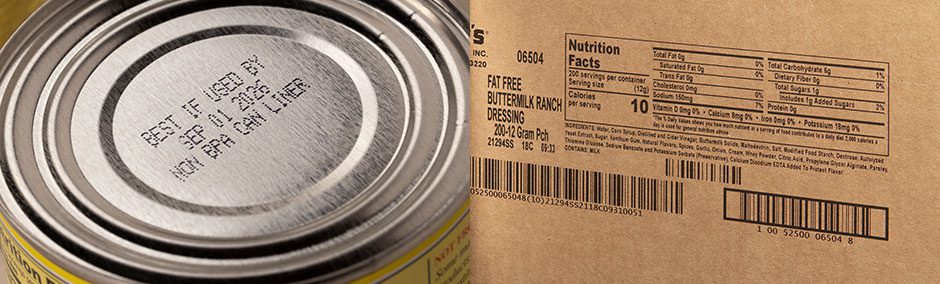
Start With Your Application: Primary or Secondary Packaging
Before comparing printer technologies, it’s important to define where and how you’ll be printing:
- Primary Packaging: Printing directly onto bottles, containers, cables, pipes, or parts
- Secondary Packaging: Corrugated cases, cartons, shrink wrap, films, and flexible packaging
Your application determines the level of durability, resolution, and substrate compatibility required.
Inkjet Printing Technologies: Flexible and Versatile
Inkjet is one of the most widely used industrial printing technologies due to its flexibility, scalability, and ability to print variable data.
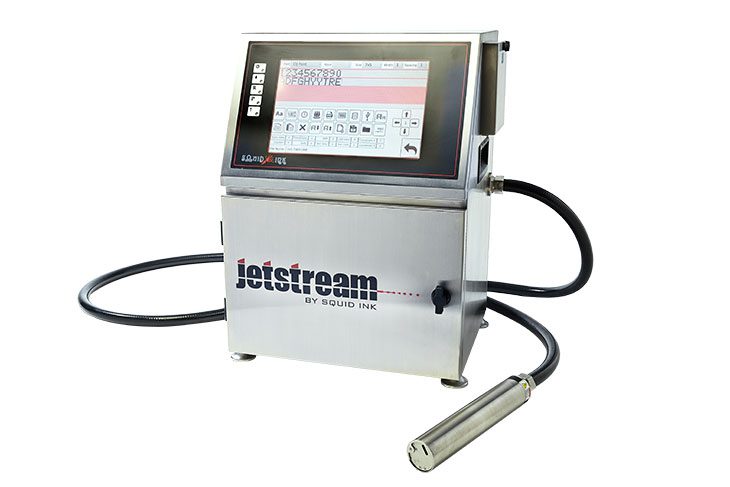
Continuous Inkjet (CIJ)
Best for: High-speed production lines and non-porous substrates
CIJ printers are ideal for printing lot codes, date codes, and batch information directly onto products and packaging.
Common substrates:
- Plastics
- Glass
- Metals
- Films and foils
Key benefits:
- Excellent for fast-moving lines
- Prints on curved and irregular surfaces where extended throw distance is required
- Wide range of fast drying ink formulations for durability

Thermal Inkjet (TIJ)
Best for: High-resolution text, barcodes, and graphics on non-porous substrates
TIJ printers are often used when print clarity and barcode readability are critical and throw distance is not an issue.
Common substrates:
- Corrugated cases
- Coated cartons
- Paper labels
- Semi-porous materials
Key benefits:
- Sharp, high-resolution output
- Lower upfront cost
- Simple maintenance and operation
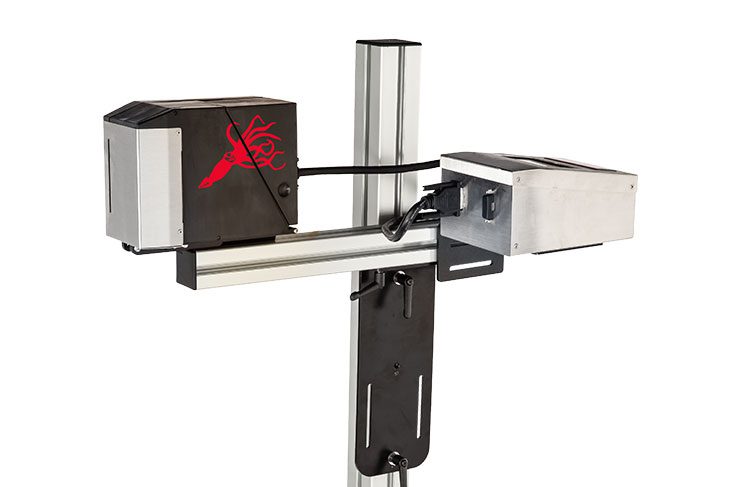
Piezo Inkjet (Hi-Resolution Inkjet)
UV Inkjet: Maximum Durability
Best for: Non-porous materials and premium branding
UV inkjet printers cure ink instantly using UV light, creating a highly durable print that resists abrasion, chemicals, and moisture.
Common substrates:
- Plastics
- Glass
- Coated cartons
- Metal surfaces
Key benefits:
- Excellent adhesion on challenging substrates
- Immediate curing with no dry time
- Low maintenance operation
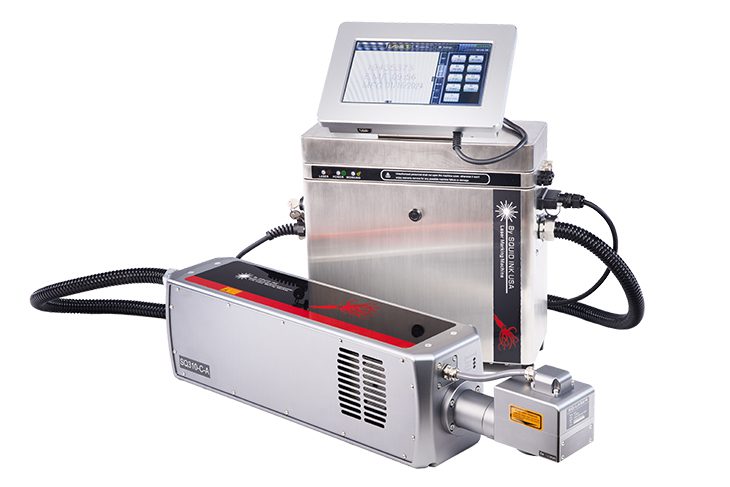
Laser Marking: Permanent and Low Maintenance
Best for: Permanent, high-contrast marking on primary products
Laser systems etch or alter the surface of a material rather than applying ink.
Common substrates:
- Cartons
- Plastics
- Glass
- Metals
Key benefits:
- No consumables (ink or solvents)
- Extremely durable and tamper-resistant marks
- Ideal for compliance and traceability
- Stationary or moving product marking
Low maintenance operation
Key Factors to Consider When Choosing an Industrial Printer
When evaluating technologies, consider these critical questions:
- What substrate am I printing on—porous or non-porous?
- Does the print need to withstand abrasion, moisture, or chemicals?
- Am I printing static content or variable data?
- What production speeds are required?
- Are barcode compliance and traceability critical?
Answering these questions helps narrow the best-fit solution.
Why Work With Squid Ink?
With decades of experience in industrial coding and marking, Squid Ink helps manufacturers select, install, and support the right printing solution for their application. Our portfolio includes:
- High-resolution piezo inkjet printers
- CIJ printing systems
- TIJ printing systems
- UV and specialty ink solutions for porous and non-porous applications
- Laser marking systems
We don’t believe in one-size-fits-all printing. We believe in matching the right technology to your materials, environment, and production goals.
Need Help Selecting the Right Printer?
If you’re unsure which industrial printer is best for your primary or secondary packaging application, the Squid Ink team is here to help. Contact us to discuss your materials, line speeds, and durability requirements—and we’ll recommend a solution that delivers long-term performance and value.
